Understanding Counterfeit Currency in the US: An In-Depth Analysis for Businesses and Consumers
In the intricate landscape of modern economics, the issue of counterfeit currency us has become a significant concern for businesses, financial institutions, and individual consumers alike. Fake money, or fake currency, threatens the integrity of the financial system, undermines trust, and causes substantial financial losses. This comprehensive guide aims to equip readers with a thorough understanding of counterfeit currency in the United States, detailing how it impacts the economy, methods of detection, legal implications, and effective preventative measures.
What is Counterfeit Currency and Why Is It a Major Concern in the US?
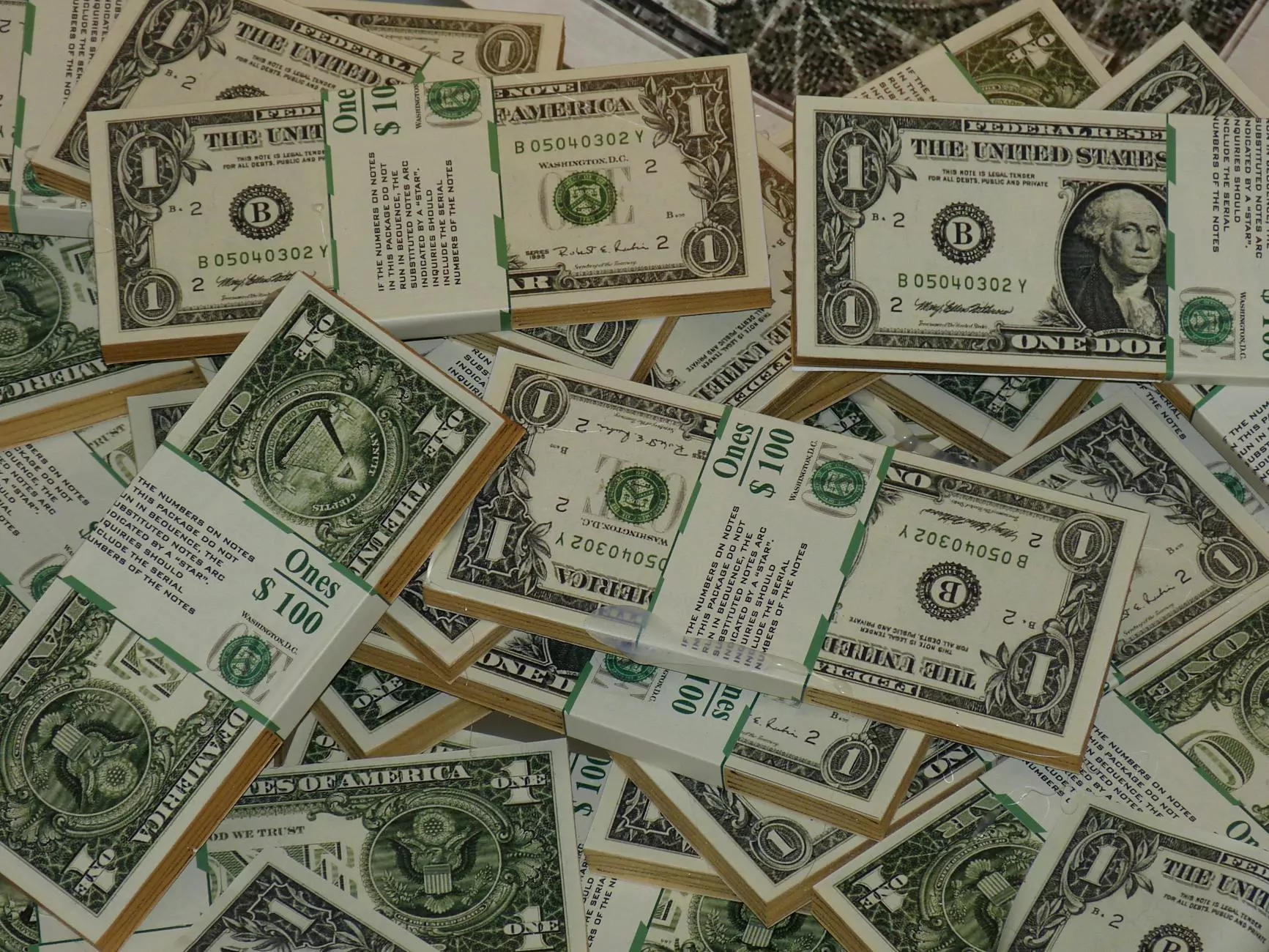
Counterfeit currency refers to imitation banknotes that are created with the intent to deceive and circulate as genuine money. These fake banknotes are designed to resemble real US currency closely enough to fool unsuspecting individuals or businesses, which can lead to financial losses, security breaches, and a compromised economy.
The issue of counterfeit currency us is particularly prevalent due to the high denomination bills, advanced counterfeit printing technology, and sophisticated methods used by counterfeiters. The US dollar remains the world's dominant reserve currency, making it a prime target for counterfeiters seeking to profit illegally.
The Impact of Fake Money on the US Economy
Fake currency affects the economy in multifaceted ways:
- Financial Losses: Businesses and individuals accepting counterfeit bills suffer direct monetary loss, which can add up to millions annually across the nation.
- Inflation and Economic Instability: Excess circulation of fake money can distort monetary policies, potentially leading to inflationary pressures.
- Damage to Trust and Confidence: The credibility of the US dollar as a stable currency diminishes when counterfeit bills circulate widely.
- Increased Security Costs: Governments and businesses must invest heavily in anti-counterfeiting technology and security measures.
Types of Counterfeit Currency in the US
Counterfeiters employ various techniques to produce fake money, which can be categorized into several types:
- High-Quality Counterfeits: These are sophisticated fake banknotes that closely mimic genuine currency, often fooling even experienced handlers.
- Low-Quality Counterfeits: Poorly produced bills with obvious flaws, often detected easily by touch or sight.
- Supernotes: Extremely high-quality counterfeit bills that are extremely difficult to detect, often linked to organized crime groups.
- Digital Counterfeits: Illegal online transactions involving fake money, including digital or virtual currencies that are illegitimate.
How to Detect Counterfeit Currency in the US
Understanding the security features embedded in US currency is crucial for effective detection of counterfeit currency us. Here are key features and tips:
Security Features of US Currency
- Watermarks: Embedded into the paper and visible when held up to the light.
- Security Thread: A clear plastic strip with microprinting that runs through the bill and glows under UV light.
- Color-Shifting Ink: Found on the numerals in the lower right corner, changes color when tilted.
- 3D Security Ribbon: On $100 bills, featuring moving images that are difficult to replicate.
- Microprinting: Tiny print that appears in various locations on the bill, hard to duplicate without high-resolution equipment.
- Raised Printing: Textures that can be felt by touch.
- Red and Blue Fibers: Small fibers embedded in the paper detectable under UV light.
Best Practices for Authenticating Cash
- Use UV Light Devices: To verify security threads and fibers.
- Compare with Known Genuine Bills: Check for inconsistencies in size, color, and design.
- Check the Feel: Genuine bills have a distinct texture due to special paper and engraved printing.
- Examine the Serial Numbers: Ensure they match and are uniformly printed.
- Employ Professional Detectors: Use banknote verification machines for high-value transactions.
Legal Framework and Penalties for Counterfeit Currency in the US
The circulation and production of counterfeit currency us are criminal offenses under federal law. The primary legislation governing counterfeit money includes the Counterfeit Detection Act of 1992 and the United States Code (18 U.S.C. § 474). Penalties for offenders range from hefty fines to lengthy imprisonment, emphasizing the seriousness with which the US government treats counterfeiting.
Importantly, individuals or businesses unknowingly accepting fake money are typically protected from criminal charges, but they are strongly encouraged to report suspicious bills to law enforcement authorities.
Strategies for Businesses to Prevent and Detect Fake Money
Businesses are on the frontline of counterfeit currency detection. Implementing effective policies can significantly reduce the risks associated with fake money:
Training Staff
- Regularly train employees to recognize counterfeit bills and use detection tools effectively.
- Maintain up-to-date knowledge about new security features and counterfeit techniques.
Utilizing Advanced Detection Technology
- Invest in high-quality banknote verification machines.
- Use UV, magnetic, and infrared detectors for multi-layer security verification.
Establishing Strict Cash Handling Procedures
- Require multiple employees to verify high-denomination bills.
- Limit cash transactions through secure POS systems when possible.
- Keep detailed records of cash exchanges, especially for large amounts.
Partnering with Law Enforcement
- Report suspicious bills immediately.
- Participate in community awareness programs about counterfeit detection.
The Role of Technology in Combatting Fake Money
Technological advancements play a vital role in identifying and reducing the circulation of counterfeit currency us. Innovations include:
- Enhanced Security Features: Continuous development of holograms, color-shifting inks, and embedded microchips.
- Digital Verification Apps: Mobile apps that analyze bills using camera technology for quick authentication.
- AI and Machine Learning: Use of artificial intelligence to detect anomalies and identify counterfeit patterns in large-scale investigations.
How Businesses Can Partner with Specialists in Fake Money Detection
Engaging with experts and specialized companies, such as undetectedbanknotes.com, can enhance your ability to prevent and detect counterfeit currency. These companies offer:
- Advanced Detection Devices: State-of-the-art machines for business use.
- Consultancy Services: Training personnel and establishing robust detection protocols.
- Legal Support: Assistance with law enforcement cooperation and understanding legal procedures.
Conclusion: Vigilance and Proactivity Are Key
In the battle against counterfeit currency us, awareness, education, and technological integration are your best defenses. Always stay informed about the latest security features of US bills, employ reliable detection tools, and work closely with legal and security professionals. By taking these proactive steps, businesses and individuals can protect themselves from the risks associated with fake money, contributing to a more secure and resilient economy.
Remember, when it comes to fake currency, the old adage holds true: "Better safe than sorry." Vigilance not only saves money but also preserves the trust and stability of the US dollar, which remains the backbone of global finance.